
The “Año Viejo” Burning — Transformation Through Fire
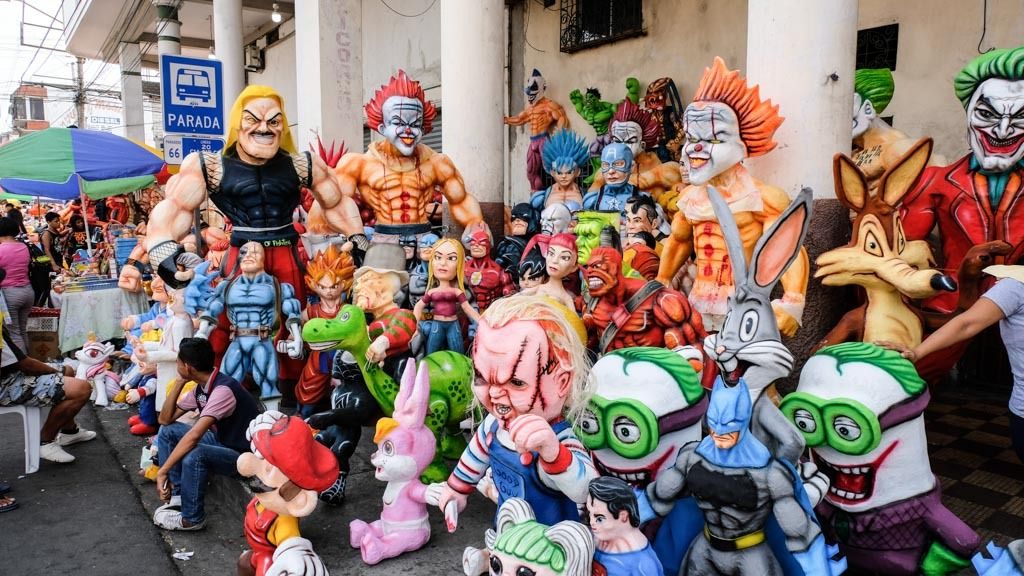
In Ecuador, saying goodbye to the year involves fire, community, and deep symbolic meaning. One of the most iconic traditions is the Año Viejo Burning, an ancestral ritual filled with intention.
Its central figure is the monigote, an effigy made of cardboard, sawdust, or paper that represents: • the joys lived, • the challenges faced, • the lessons learned, • and everything that has fulfilled its cycle.
At midnight, it is set on fire. The flames consume the old to make room for the new.
The Effigy: A Symbol of Transformation
Whether handmade or bought from street artisans, the monigote is more than a figure— it is the symbolic body of the year that is ending.
By burning it, people express: • liberation, • cleansing, • renewal, • and the desire to step forward without emotional weight.
Jumping Over the Flames: An Ancestral Gesture of Courage
Many people jump three times over the effigy’s flames.
This act symbolizes: • courage, • personal evolution, • spiritual rebirth, • and the intention to enter the new year with lightness and clarity.
To jump is to rise above what is being burned. It is a symbolic declaration: “Nothing from the past holds me back. I begin anew.”
The Power of Fire in Ecuadorian Tradition
Fire purifies and transforms. It burns away stagnation, dense energy, and emotional residue. And in doing so, it illuminates the path ahead.
The Año Viejo burning does not simply mark the end of a calendar year— it marks the beginning of a renewed, lighter, and more conscious version of yourself.